Evaporative Cooler vs Air Conditioner
Posted by NorthStock, Inc on May 2nd 2024
Evaporative Cooler vs. Air Conditioner: Choosing the Best Cooling Solution
There are a wide range of commercial cooling systems to meet diverse needs for commercial and industrial applications. This allows you to find the ideal solution for your space, but it also means there are a lot of options to narrow down. The first step is understanding the difference between an evaporative cooler and an air conditioner.
Understanding Evaporative Coolers
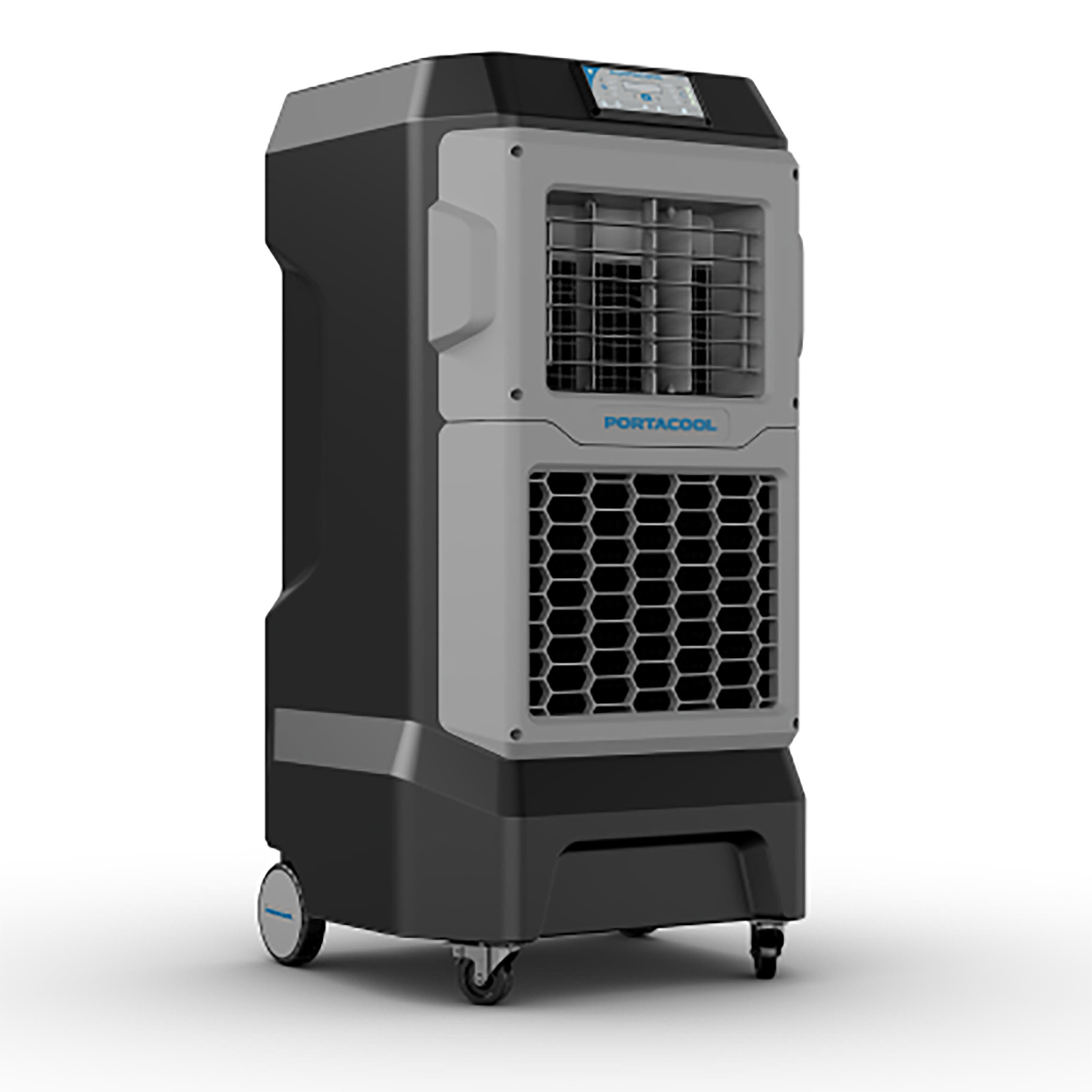
Evaporative coolers are also known as swamp coolers, and they are most effective in dry, arid climates. Evaporative cooler principles have been utilized for decades: using only water and a fan, these units rely on evaporation to cool and humidify the air. The unit contains simple components like a water reservoir, a pad with a large surface area, and a fan. It's easy to understand how evaporative coolers work: the fan pulls the warm air across the wet pad, which evaporates the water and cools the air.
Understanding Air Conditioners
Air conditioner operation relies on a refrigeration cycle, and both permanent and portable air conditioners work the same way. AC components include a compressor, condenser, and evaporator, and the units use a chemical refrigerant that flows through the tubes or coils. The refrigerant absorbs the heat in the room and expels it outside. Air conditioners are effective in a wide range of climates.
Performance and Suitability
Air conditioner performance doesn't depend much on the climate, but evaporative cooler suitability varies greatly by region. Evaporative coolers offer the best cooling efficiency in dry climates and are far less effective in humid areas. In those regions, an air conditioner is a better choice.
Still, you have options. Both air conditioners and evaporative coolers are available in portable and permanent models in a range of sizes. Consider the following:
- The size of your space
- Whether you're working indoors or outdoors
- Humidity levels
- The temperature difference you need to achieve
Cost Considerations
Evaporative cooler costs are minimal. They are easy to set up, energy-efficient, and require little maintenance. Air conditioner expenses are higher. These units require more maintenance and upkeep. However, air conditioners typically last longer than evaporative coolers and you'll notice that manufacturer's warranties are longer for most air conditioners, too. While the upfront cost comparison highlights the evaporative cooler as most cost-efficient, you have to consider the long-term cost of replacing the unit, as well.
Energy Efficiency and Environmental Impact
When it comes to environmental impact, evaporative coolers are the most sustainable cooling choice. They use water instead of the chemical refrigerants used in AC units and offer greater energy efficiency. According to this fact sheet from the University of Arizona, air conditioners can use up to four times more electricity than evaporative coolers.
Maintenance and Durability
Both types of commercial cooling system have specific maintenance requirements to prolong system durability and improve efficiency. With routine maintenance, industrial air conditioners can last up to 20 years and evaporative coolers can last up to 15 years.
- Evaporative Coolers: Keep the cooling pads clean. You can put diluted white vinegar into the water reservoir, let it sit for a while, then drain and rinse as a simple cleaning measure. Professional maintenance service is generally recommended once every one to three years, depending how much you use it and if you're noticing any issues in cooling capability.
- Air Conditioners: The U.S. The Department of Energy recommends cleaning or replacing the filter, cleaning the condenser and evaporator coils, and making sure the condensate drains are clean and clear. You should hire a technician to check refrigerant levels, test for leaks, and check the accuracy of the thermostat. These maintenance visits are typically performed twice a year—once in the fall and once in the spring.
There are a few common issues to watch out for and potential troubleshooting solutions:
No Cold Air
- Air Conditioner: Check to see if the evaporator is dirty, the filter is dirty, or the refrigerant is low.
- Evaporative Cooler: Make sure the pad is holding water and that there aren't any clogs in the water tubes.
No Air Flow At All
- Air Conditioner: If the unit won't turn on, check the fuse box for a tripped circuit. If that's not the case, call for professional repair.
- Evaporative Cooler: Same. No air flow could also be caused by an overheated motor.
Bad Odors
- Air Conditioner: A burning smell could be an issue with the electrical wiring, which would require professional help. A moldy, mildewy smell could be caused by a dirty filter—or a clog in the system or even a dead animal in the ductwork.
- Evaporative Cooler: This is often the result of stagnant water in the unit. Drain the reservoir and clean it thoroughly to remove lingering bacterial growth.
Pros and Cons Summary
Evaporative Cooler Pros and Cons
- Less expensive
- Easier to install
- Energy-efficient
- Minimal maintenance
- Shorter life span than an air conditioner
- Not effective in humid climates
Air Conditioner Advantages and Disadvantages
- More expensive to purchase and install
- Longer lifespan, typically with a longer manufacturer's warranty
- Produces more carbon emissions
- Requires more maintenance than an evaporative cooler
- Effective in all climate regions
Making the Right Choice for Your Needs
The primary factor in choosing cooling systems for your industrial or commercial application is the climate region, as evaporative coolers are not suitable in humid areas. From there, this is what to consider with evaporative cooler vs. AC unit:
- Size of the space and cooling requirements
- Space available for installation
- Budget
- Energy efficiency
- Optional heating capabilities
- Portable vs. permanent cooling systems
- For air conditioners, PTAC vs. VTAC
- And more
Shop Evaporative Cooler and Air Conditioners
Both are great options—in the right environment. If you live in a humid climate, that's the first determining factor, as an evaporative cooler won't be effective. After that, you'll have to consider your budget, the size of your space, and more to make the best decision for your commercial or industrial facility. NorthStock carries a large selection of both evaporative coolers and air conditioners. Contact us today.
FAQ
Is Evaporative Cooling as Good as Air Conditioning?
In the right environment, yes! In some cases, it may be even better than air conditioning because evaporative units are more energy efficient and easier to install.
What Is the Disadvantage of Evaporative Cooling?
Evaporative coolers are not effective in humid climates.
Do Evaporative Coolers Actually Cool a Room?
Yes! The evaporative cooling process has been in use for decades.
What's the Difference Between an Evaporative Cooler and an Air Conditioner?
Air conditioners use refrigerant to cool a space, while evaporative coolers use water.
What Are the Drawbacks of Evaporative Cooling?
Swamp coolers aren't effective in high-humidity environments. They're also not great for lowering the temperature if it's already below 75 degrees Fahrenheit.
Is It Cheaper to Run a Swamp Cooler or an Air Conditioner?
Depending upon the cost of electricity and water in your area, it's typically more cost-effective to run a swamp cooler.
Do Swamp Coolers Work in 90 Degrees?
Yes. Swamp coolers are most effective in high-heat, low-humidity climates.